
Most ghost stories are about getting rid of something. My Sad Dead is about learning you were never going to get rid of it, and slowly, quietly, deciding that’s okay.
That’s an unusual thing for a horror show to be built around, and it’s why this four-episode Netflix miniseries from Pablo Larraín is going to frustrate some viewers and genuinely move others. I’ll walk through both the review and the ending here, because with a show this deliberately vague, I think you need both halves to fully get what it’s doing.
Quick Facts
- Title: My Sad Dead (Mis muertos tristes)
- Platform: Netflix, all four episodes released September 24, 2026
- Genre: Psychological horror, supernatural drama
- Episodes: 4, each roughly 55 minutes
- Director: Pablo Larraín, his first Argentine production
- Based on: stories by Argentine writer Mariana Enríquez
- Language: Spanish
- Cast: Mercedes Morán (Ema), Dolores Fonzi (Carolina/Caro), Alejandra Flechner (Lidia), Carolina Sánchez Álvarez (Julie), plus Luz Jiménez, Carlos Portaluppi and Germán De Silva
- Setting: Piedrabuena, a run-down housing block on the edge of Buenos Aires
What It’s About
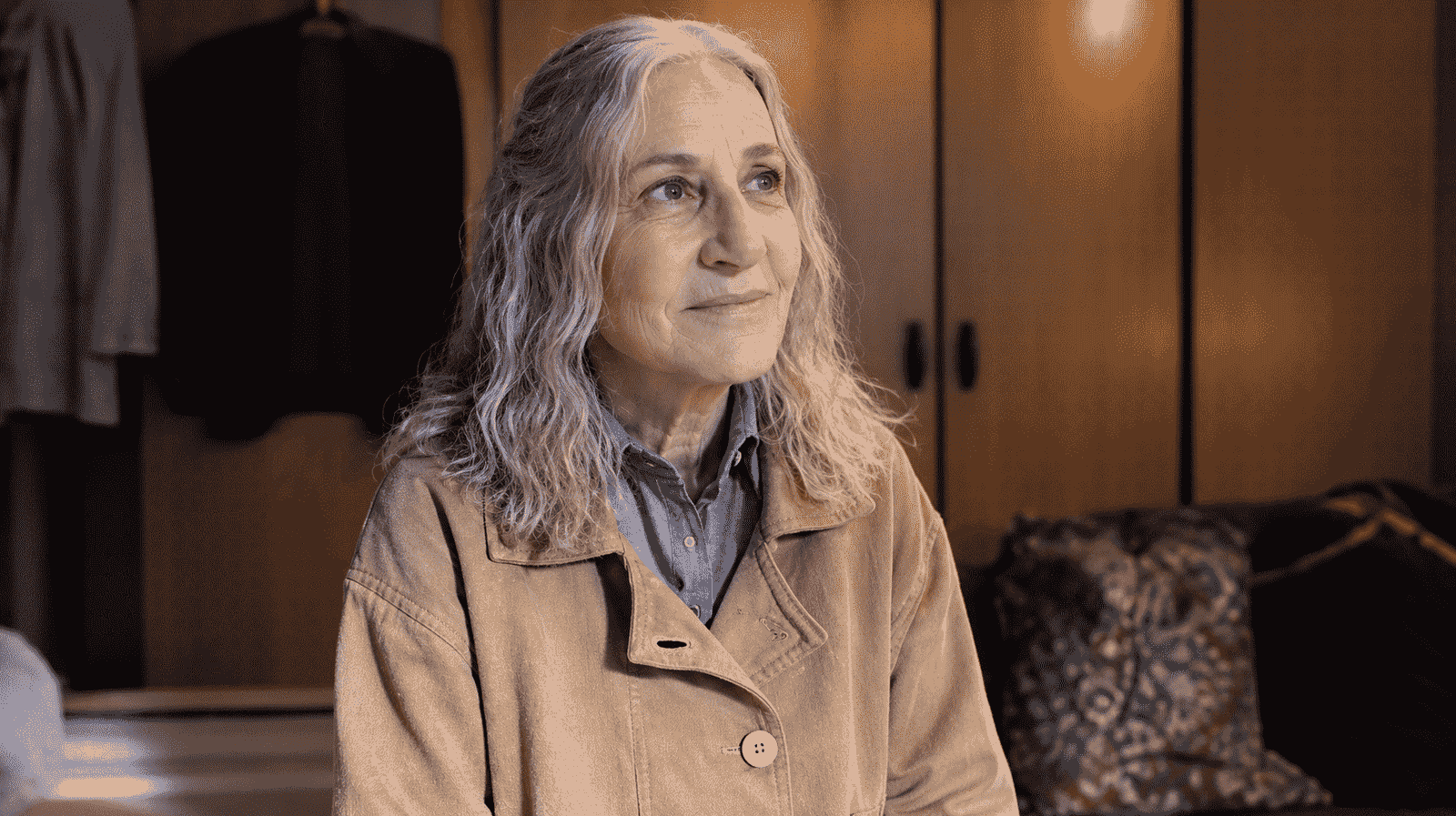
Ema is a recently retired doctor who has spent her whole life able to see and speak to the dead. There’s no chosen-one mythology built around it, no glowing eyes, no rulebook. It’s just something she’s carried since childhood, the way some people carry a bad knee.
Three weeks before the story starts, her mother dies. Except she doesn’t really leave. Ema can still see her, still talk to her, and the show opens by making that fact sit in your chest rather than explaining it away. Then Ema’s niece, Julie, moves in, and it turns out she shares the same ability, only Julie doesn’t manage it the way her aunt does. Julie’s dead friends are real to her in a way that starts pulling her further from the living world, not closer to it. That gap between how Ema copes and how Julie doesn’t becomes the engine of the whole series.
What Works
It treats “seeing dead people” as exhausting, not exciting. This is the smartest choice the show makes, and I think it’s the reason the premise doesn’t collapse into gimmick. Ema isn’t hunting mysteries or solving crimes. She’s a tired woman trying to get through grief, family tension and a niece she doesn’t fully understand, and the ghosts are just one more obligation stacked on top of an already full plate. I found that framing genuinely refreshing. Most shows treat a supernatural gift as a superpower with a cost. Here it’s presented almost like chronic illness: manageable most days, unbearable on others, never actually gone.
Mercedes Morán holds the whole thing together. She plays Ema restrained almost to the point of flatness, and that’s exactly right for this character. Watching her sit across from her dead mother at a family breakfast, unable to properly mourn because the person she’s mourning is still, technically, right there, is the show’s best recurring idea. You can’t grieve someone who keeps showing up. You also can’t pretend they’re alive. Morán plays that impossible middle space with real precision, and it’s the performance the whole miniseries is built around.
The horror comes from circumstances, not monsters. The ghosts here aren’t scary because they’re supernatural. They’re scary because their deaths actually happened, and death doesn’t erase why. As the story widens beyond Ema’s family and into Piedrabuena itself, the show starts using its dead as a kind of quiet social record: people who were failed by poverty, neglect and violence before they ever became ghosts. I liked that the haunting doubles as an accusation. Somebody let this happen, and the dead simply refuse to stop being proof of it.
Julie’s arc gives the show its saddest, most human thread. Where Ema has spent decades learning to live alongside her ability, Julie is still drowning in hers, and her pull toward her dead friends becomes genuinely unsettling to watch, not because it’s violent, but because it looks so much like addiction. There’s a real, specific sadness in watching someone choose the version of connection that will eventually consume them, because it’s easier than facing the living world’s silence.
What Didn’t Work
I don’t want to oversell this as a flawless piece of television, because it isn’t, and being honest about where it drags matters more than pretending every choice landed.
The pacing tests your patience, hard. Several critics have called the show’s rhythm “slow to the point of inertia,” and having sat with the full four hours, I understand exactly what that means. There are stretches where the show lingers on mood, empty streets, long silences, atmospheric dread, well past the point where the scene has already made its point. I understand the intent: grief is slow, and the show wants you to physically feel that slowness. But intent doesn’t always excuse the experience of watching it, and a few sequences genuinely could have been trimmed without losing anything emotional.
The visual style is a deliberate choice that won’t land for everyone. This isn’t glossy streaming horror. The cinematography is stripped down, almost desaturated, closer to handheld arthouse filmmaking than a polished Netflix production. One critic compared the texture to an “iPhone movie” with bled-out colors. I actually think this works in the show’s favor, since it makes the ordinary and the supernatural blur together in a way that feels genuinely eerie rather than staged. But if you’re expecting the crisp, high-gloss horror look most streaming platforms default to, this will feel unfinished rather than intentional.
Some subplots don’t fully connect. The show widens its focus in the back half to include more of the neighborhood around Ema’s family, and while individual threads are interesting on their own, a few of them get dropped or shifted away from right as they start to build toward something. It’s the kind of structural looseness that suits a slow, mood-driven series in theory, but in practice it occasionally left me unsure what to hold onto emotionally from one episode to the next.
This will not work for horror fans wanting actual scares. If you come in expecting jump scares or a rising body count, you will be disappointed within the first twenty minutes. This is a show about dread and sorrow sitting at the same table, literally, and it wants a very different kind of engagement than most horror does.
Ending Explained
Full spoilers from here.
The finale brings everyone back to the same dining table where the season started, except this time it’s the ghosts of Ema’s mother and Julie sitting alongside the still-living Ema and Caro. That image is the whole point of the series compressed into one shot: nobody disappears, nothing gets resolved cleanly, and the family simply learns to exist around a table with the dead included rather than exorcised.
Julie’s water tank storyline is the emotional climax. Julie, desperate to reunite with her dead friends, jumps into Piedrabuena’s massive water tank looking for them. When it’s later drained, she’s left feeling completely lost, cut off from the only connection that ever made sense to her. It takes real time, and real effort from Ema, to coax her back from that isolation. By the end, Julie makes her way home, and her friends are there waiting, the same as always. The show doesn’t frame this as tragic so much as inevitable: this is simply how Julie’s relationship with the dead was always going to look, and the family finally stops trying to fix it into something more comfortable for themselves.
The ghosts of Piedrabuena stay, and that’s deliberate. The neighborhood’s dead don’t move on by the finale either. I think this is the show’s sharpest idea: those ghosts exist as a kind of permanent social evidence. Piedrabuena is a place shaped by violence and neglect, and its dead were largely failed by circumstances before anything supernatural entered the picture. By refusing to let them fade quietly into an afterlife, the show is making a specific, uncomfortable point about who gets remembered and who gets erased once they’re gone. The lack of resolution isn’t a loose end. It’s the argument.
My take on what it all means: I think the show is using the ghosts less as a horror device and more as a stand-in for everything grief leaves unfinished, guilt, silence, the things families never said out loud before someone died. Ema’s whole arc is about realizing that the dead aren’t something to banish; they’re something to sit with, the same way you sit with an old argument you never resolved. Julie’s arc is the darker mirror of that same idea taken to its extreme: what happens if you don’t ever learn to sit with it, and instead try to live entirely inside it. Put those two next to each other, and the ending isn’t really about ghosts at all. It’s about which kind of griever you’re going to be.
Should You Watch It?
If you want atmospheric, sad, unconventional horror that trusts you to sit with discomfort rather than jump-scaring you through it, this is a genuinely rewarding watch, especially for fans of Larraín’s other work or Mariana Enríquez’s fiction. If you need pace, plot momentum, or a clean resolution, you’re going to find the experience frustrating.
My rating: ★★★½ (3.5 out of 5)
It’s original, well-acted and thematically sharp, but the deliberate slowness will cost it some viewers who came in expecting a more conventional ghost story.
Your turn: Did the ending’s lack of resolution work for you, or did you want the show to actually let someone go? Let me know in the comments, and stream My Sad Dead on Netflix now.