
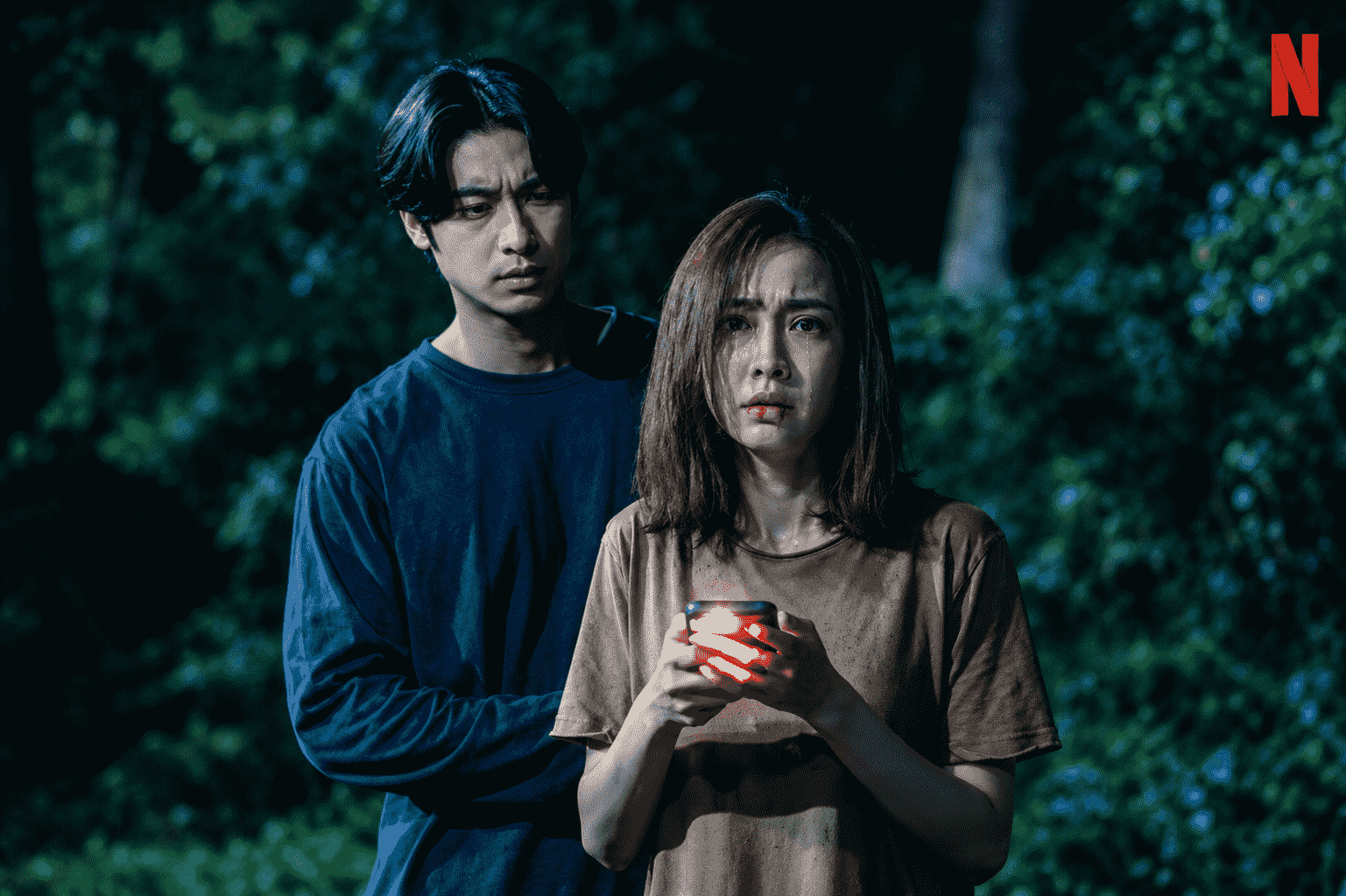
Some shows make you doubt the killer’s identity. Delusion makes you doubt everyone in a family, one relative at a time, until you’re not sure which secret is worse: the murders, or how long everyone knew about them.
That’s a genuinely strong idea for a six-episode Thai thriller. Whether the show pulls it off cleanly is a separate question, and it’s the one I want to spend this review answering honestly, because I think Delusion is a lot more interesting than it is well-built.
Quick Facts
- Title: Delusion (Thai: ภาพลวงตาย, “Phap Luang Tai”)
- Platform: Netflix, streaming globally from September 24, 2026
- Genre: Psychological crime thriller
- Episodes: 6, each around 50 minutes
- Director: Chayan Laoyodtrakool
- Writers: Chayan Laoyodtrakool, Kasidej Sundararjun, Kanokphan Ornrattanasakul
- Cast: Natapohn Phornprapha (Wan), Jespipat Tilapornputt (Pete), Surasak Chaiyaat (father), Sirani Yankittikan (mother), Vachiravit Paisarnkulwong (Wat), TAE (Yote), Norraphat Nakadumrongchai, Boombim Samtone, Suttawat Settakorn
What It’s About
Wan is a high school teacher juggling a rough divorce and a custody fight over her son when her mother calls in a panic. Her father, an ageing man showing clear signs of dementia, has attacked his own wife, convinced she’s a demon named Phii Pong. Wan rushes back to her family’s village to sort it out, expecting a sad but manageable situation involving her father’s declining mind.
Instead, she walks straight into a murder investigation. A child has gone missing, the body eventually turns up in the forest, and the village decides almost instantly that her confused, unpredictable father is the one who did it. Wan spends the rest of the season trying to prove he isn’t a killer, and every step of that search drags her further away from the family she thought she knew and closer to a truth none of them wanted found.
What Works
The show understands that fear spreads faster than facts. This is the part Delusion nails. The village doesn’t need real evidence to convict Wan’s father in the court of public opinion; it just needs a scared, confused old man wandering around after dark and a folk legend everyone already half-believes in. Watching an entire community build a case out of superstition and convenience, rather than proof, is genuinely unsettling, and it says something true about how small towns handle fear. Nobody wants to look too closely at their own family when there’s a stranger, or a “cursed” man, standing right there to blame instead.
Natapohn Phornprapha carries the emotional weight of the whole show. Wan isn’t written as a fearless amateur detective. She’s someone stretched painfully thin, fighting for custody of her son while trying to keep her father safe, and Phornprapha plays that exhaustion in a way that feels lived-in rather than performed. The moments where she has to decide whether to trust her own family are the strongest scenes in the series, because you can see her actively working through the betrayal in real time instead of just reacting to a plot twist.
Surasak Chaiyaat is quietly the best part of the cast. Playing a man slowly losing his grip on reality is a hard needle to thread, tip too far one way and he’s a cartoon, tip too far the other and there’s nothing to watch. He mostly gets it right. There’s a specific stretch where he can’t tell if he’s looking at his wife or the demon from local legend, and the confusion on his face is more frightening than any of the show’s actual violence.
The reveal about Phii Pong is the smartest twist in the show. Without spoiling the full mechanics, the “supernatural threat” everyone in the village fears turns out to be something a very human, very greedy person built and profited from. I liked this a lot, because it’s a sharp comment on how easily fear can be turned into a business, and how willing people are to pay someone else to explain away things they don’t understand. It’s the one twist in the season that felt earned rather than just shocking for its own sake.
What Didn’t Work
I want to be upfront here, because I don’t think Delusion deserves a pure recommendation, and a review that only praises it would be doing you a disservice.
The plot gets tangled in its own twists. Somewhere around the midpoint, the show starts stacking reveal on top of reveal, and not all of them earn their place. A few other reviewers have flagged this exact issue, one calling the plot “unnecessarily convoluted,” and I agree with that read. There’s a difference between a story that’s genuinely complex and one that confuses you because it’s juggling too many secrets at once. Delusion occasionally tips into the second category, especially once the blackmail plot and the true killer’s motive both get piled onto an already crowded mystery.
Some side characters exist mainly to hold plot information. The detective character, Pete, is a solid addition as the outsider who trusts evidence over rumor, but a few of the extended family members feel thinner than they should, given how much the final act depends on you caring about what they did and why. When a show’s whole twist rests on “the family has been hiding something for years,” I want to feel that weight in every family member, not just the one or two the camera focuses on.
The pacing dips hard in the middle episodes. The opening sets up real dread, and the finale lands some genuine gut-punches, but episodes three and four spend a lot of time circling the same suspicions without moving the investigation forward much. If you’re watching this weekly rather than bingeing, that stretch might test your patience.
The visual style doesn’t always match the story’s ambition. The rural setting does a lot of atmospheric work on its own, fog, dense trees, a village that feels cut off from everything, but I found some of the direction fairly flat given how much tension the writing wants you to feel. A story this reliant on dread benefits from a camera that knows how to sit in a moment; this one sometimes cuts away just when it should be lingering.
Mental Health, Handled With Some Care
One thing I want to give the show real credit for: it doesn’t treat dementia as a cheap horror gimmick, even though it easily could have. The confusion, the fear, the way an ageing parent’s decline reshapes an entire family’s dynamic, all of that gets genuine attention here, not just as a plot device to make the father seem scary. If you’ve watched someone in your own life go through something similar, a few scenes will hit closer to home than a straightforward thriller usually does. It’s not a perfect handling of the subject, the show is still, after all, using it to fuel a murder mystery, but it’s more thoughtful than I expected going in.
My Take on the Ending
Without spoiling the full mechanics of who did what, I’ll say this much: the ending is less interested in punishing the guilty than in showing you how far a family will go to protect its own, even the members who don’t deserve protecting. That’s a more uncomfortable note to end on than a typical “justice is served” thriller conclusion, and I respect the show for not softening it. Wan doesn’t get a clean, satisfying win. She gets clarity, and clarity turns out to be its own kind of punishment.
My own theory, watching how carefully the show sets up its blackmail subplot early on, is that the writers always intended this to be less “whodunit” and more “who gets away with it, and why.” Once you watch it through that lens, some of the mid-season pacing issues make a bit more sense, the show isn’t just stalling for time, it’s slowly building the case for why silence becomes the family’s only option. I don’t think that fully excuses the sluggish middle stretch, but it did change how I felt about the ending once I got there.
Verdict: Hit or Flop?
Delusion is a solid watch, not a great one. It has a genuinely clever central idea about fear, blame, and family loyalty, strong lead performances, and an ending that earns its bleakness instead of faking it. But it also asks you to sit through some muddled plotting and thinner side characters to get there, and a tighter four or five episodes probably would have made this a stronger show overall.
If you like slow-burn mysteries that reward patience and don’t mind a story that occasionally overcomplicates itself, this is worth your six episodes. If you want a tightly plotted thriller with no loose threads, you’ll likely find yourself frustrated by the midsection.
My rating: ★★★½ (3.5 out of 5)
Your turn: Did you guess the real killer before the reveal, or did the show catch you off guard? Let me know in the comments, and stream Delusion on Netflix now.