
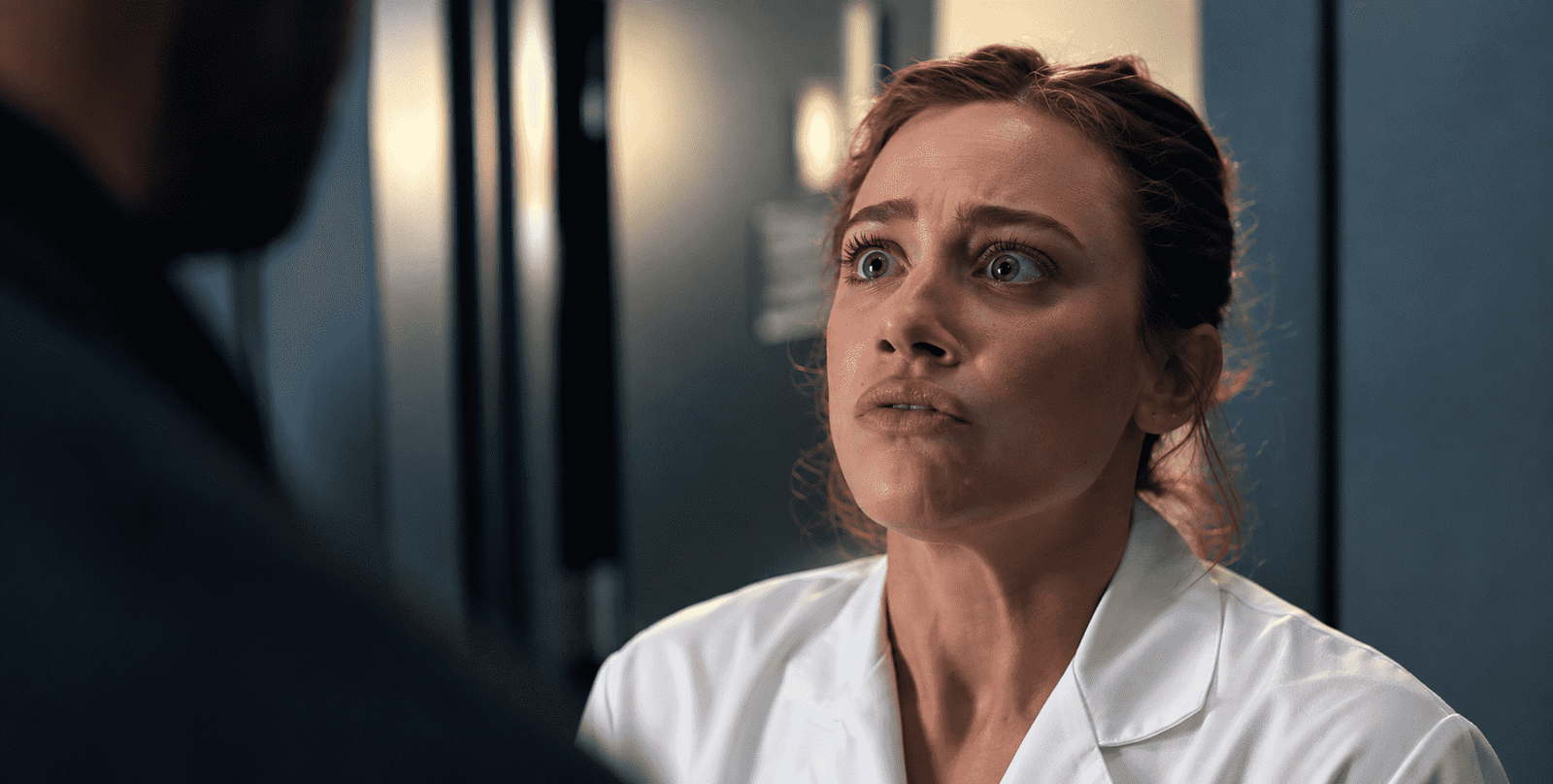
I went into The Love Hypothesis already knowing the ending. Everyone who has spent five minutes on BookTok knows the ending. Grumpy professor, fake relationship, sunscreen scene, the works. The real question wasn’t whether Olive and Adam end up together. It was whether the movie could make me care about the getting-there part again, even though I already knew every beat.
It mostly does. Not because it does anything new, but because it commits so fully to what it is that I stopped waiting for surprises and just let it work on me.
Quick Facts
- Title: The Love Hypothesis
- Platform: Prime Video, streaming globally from September 23, 2026
- Genre: Romantic comedy
- Director: Claire Scanlon (Set It Up, The Unbearable Weight of Massive Talent)
- Writer: Sarah Rothschild, based on Ali Hazelwood’s 2021 novel of the same name
- Cast: Lili Reinhart (Olive Smith), Tom Bateman (Dr. Adam Carlsen), Rachel Marsh (Anh), Jaboukie Young-White (Malcolm), Nicholas Duvernay (Jeremy), Arty Froushan (Tom)
- Source material: Hazelwood’s novel spent close to a year on the New York Times bestseller list and started life as Reylo fan fiction, built around the Rey and Kylo Ren dynamic from Star Wars
What It’s About
Olive Smith is a biology PhD candidate who is fine, actually, not still hung up on her ex, thank you very much. She’s so fine that when she spots her best friend Anh about to date that same ex, Olive panics and kisses the nearest stranger to prove she’s already moved on. That stranger turns out to be Dr. Adam Carlsen, the professor every student in the building is terrified of.
Instead of the disaster you’d expect, Adam plays along. He needs to look like a settled, serious guy to convince the university he’s not about to bolt for a job elsewhere, and a girlfriend helps that image. So the two of them build a fake relationship with rules, a fake anniversary, and absolutely zero plan for what happens when the rules stop mattering.
You know where this goes. The movie knows you know. And it uses that knowledge instead of fighting it.
What Works
Reinhart and Bateman actually have chemistry, and it takes its time. I’ll be honest, Bateman’s Adam does not land in his first scenes. He’s playing “intimidating tyrant” so hard in the opening stretch that I wasn’t sure there was a person under it. But watch what happens once the fake dates start. He loosens, scene by scene, and by the time Olive and Adam are sharing a hotel room they’re not supposed to be sharing, I’d completely bought it. Reinhart is the steadier one from minute one. She plays Olive’s panic and her dry humor with the same straight face, and that’s harder to pull off than it looks.
The friendship with Anh is the real heart of this movie. This is where the film surprised me most. Most fake-dating rom-coms treat the best friend as comic relief who shows up to ask “so, how’s the fake boyfriend?” every twenty minutes. Here, Anh and Olive’s friendship gets actual screen time and actual stakes. Olive’s whole scheme only exists because she doesn’t want Anh to feel guilty about liking Olive’s ex. That’s a genuinely sweet, slightly messy reason for a fake relationship to start, and it made me like Olive more than the “I need a grant” plotline ever did.
It doesn’t pretend to be deeper than it is. Scanlon directed Set It Up, and you can feel that same instinct here: know the formula, hit the formula’s marks well, don’t apologize for it. There’s a stretch in the middle where the movie just lets Olive and Adam bicker in a lab and go for coffee and text each other stupid things, no forced conflict shoved in, and that’s genuinely the best part of the film. When it trusts the leads to be charming without a crisis attached, it’s a good hang.
The lab politics have a point to make, and it lands without a speech. Adam is intimidating in a specific way that Olive isn’t afforded. The movie quietly shows how differently men and women in academia get treated when they’re ambitious, without turning it into a lecture. It’s not a deep dive into gender politics, but it’s there, and it gives Olive’s character a reason to exist beyond “girl who needs a boyfriend.”
What Didn’t Work
I’m not going to pretend this is a great movie, because it isn’t, and here’s the honest list of what dragged for me.
The premise doesn’t hold up if you poke it. Adam needing a fake girlfriend to secure a grant is the kind of plot mechanic that works fine if you don’t think about it for longer than five seconds, and the movie basically tells you not to. Fine, whatever, rom-coms have always run on flimsy premises. But this one feels flimsier than most, because the emotional reason (Olive protecting her friendship with Anh) is so much stronger than Adam’s professional reason that his half of the plot feels like homework.
There’s very little tension in the will-they-won’t-they. The whole trope depends on you wondering when the rules will break. Here, I never once wondered. The movie tips its hand so early and so often that the “boundaries” Olive and Adam set up feel decorative, like a piece of furniture nobody expects to actually use.
The side characters barely register. Malcolm and Jeremy exist mostly to move Olive and Anh into the right rooms at the right time. Jaboukie Young-White is funny in his handful of scenes, but the script doesn’t give him anything to actually do. For a cast with this much talent sitting around the edges, it’s a waste.
It’s missing yearning. I want to be specific here, because “predictable” isn’t really my complaint; slow-burn rom-coms are supposed to be predictable. My complaint is that the movie moves through its beats efficiently instead of letting them breathe. There’s a version of this film that lingers on a look a beat too long, that makes you feel the ache of two people who aren’t supposed to want each other. This version mostly just gets from plot point A to plot point B competently. It’s warm. It rarely aches.
The Book-to-Screen Question
If you’ve read Hazelwood’s novel, you’ll recognize the big set pieces on the checklist: the accidental first kiss, the sunscreen moment, the hotel room sleepover. The film clearly wants to give readers their highlight reel, and for the most part it delivers those beats faithfully rather than reinventing them. What it trims is mostly interior monologue, which makes sense for the format, but it does mean some of Olive’s specific anxieties from the page come through more generically on screen. If you loved the book for Olive’s voice in your head, that particular pleasure doesn’t fully translate.
Should You Watch It?
If you want a movie that will surprise you, this isn’t it. If you want two hours where good-looking people slowly fall for each other while wearing lab coats and exchanging fake anniversary gifts, it’s a comfortable, well-cast watch, and it knows exactly what audience it’s trying to please.
I’d put it a notch above most “movie of the week” streaming rom-coms, mostly because Reinhart and Marsh’s friendship storyline gives it something to hold onto beyond the couple. It’s a nice Wednesday-night watch, not a movie I expect to think about a week from now.
My rating: ★★★½ (3.5 out of 5)
Charming, well-cast, comfortably predictable. If you’re after real ache and tension, look elsewhere. If you just want a soft landing after a long week, this does the job.
Your turn: Have you read the book, and did the movie match how you pictured Olive and Adam? Let me know in the comments, and catch The Love Hypothesis on Prime Video from September 23.