
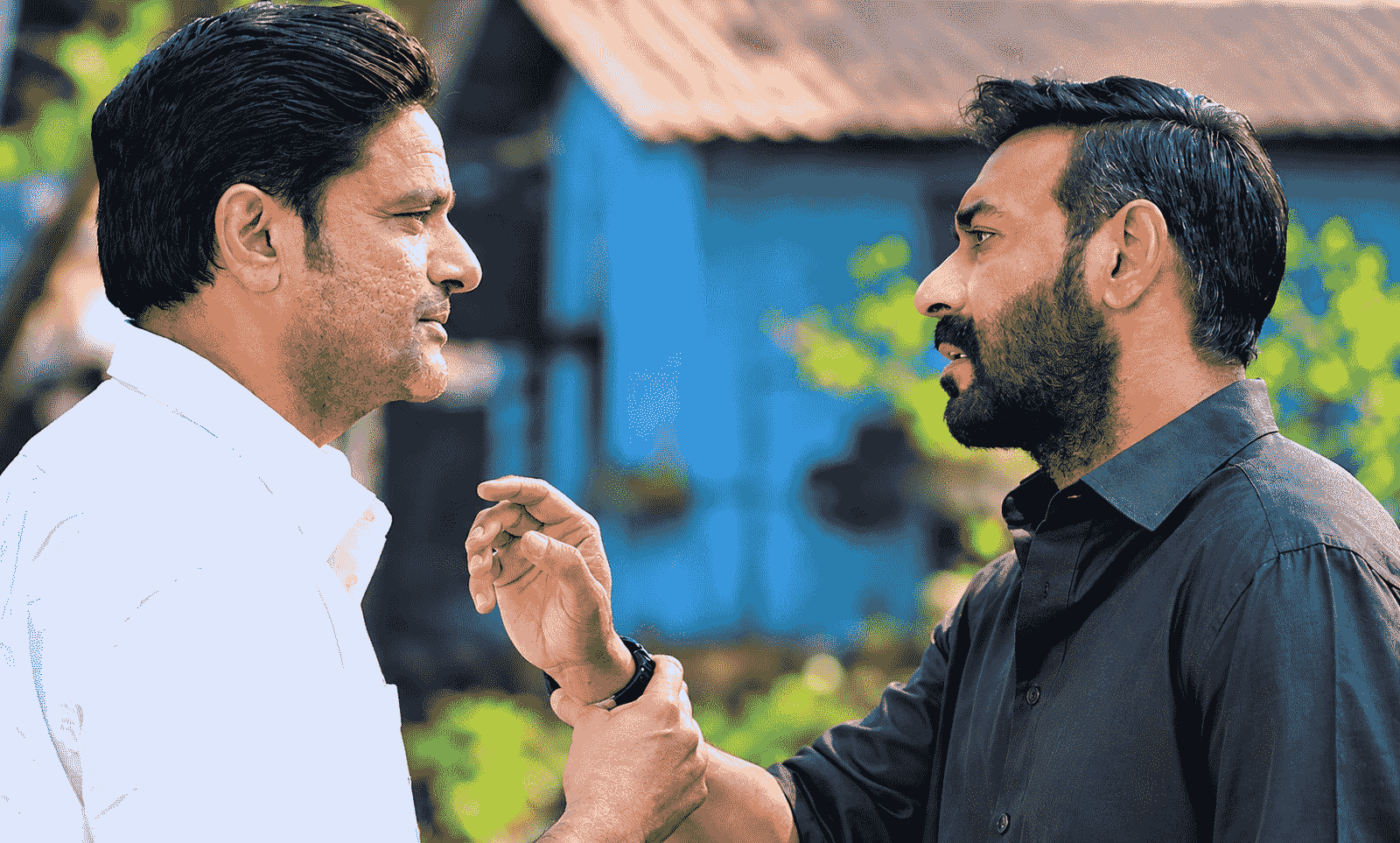
Seven years after Drishyam 2 ended, the Deshmukhs are still digging. That’s the one sentence you need to walk into this film with. Everything else, the new cop, the new lawyer, the new evidence, is built on top of that one unfinished grief: a mother who refuses to believe her son’s killer walked free.
I’ll be upfront about something before I get into the film itself. This is not a remake of Mohanlal’s Malayalam Drishyam 3, which released back in May. Wikipedia and multiple trade reports confirm the Hindi franchise has gone its own way this time: an original script written specifically to close out Ajay Devgn’s Vijay Salgaonkar, with none of the skeletal-remains, psychiatrist and Sahadevan-Bastin plot threads that drove the Mohanlal version. If you’re coming in expecting a scene-by-scene translation of the Malayalam film, that’s not what this is, and I think that’s actually the smartest decision the makers made.
Quick Facts
- Title: Drishyam: The Conclusion
- Released: October 2, 2026, theatrically in India
- Director: Abhishek Pathak (returning from Drishyam 2)
- Runtime: 2 hours 30 minutes
- Cast: Ajay Devgn (Vijay Salgaonkar), Tabu (Meera Deshmukh), Jaideep Ahlawat (SP Rajveer Singh Tomar), Prakash Raj (Indrajit Shetty), Shriya Saran (Nandini Salgaonkar), Rajat Kapoor (Mahesh Deshmukh), Ishita Dutta (Anju Salgaonkar), Mrunal Jadhav (Anu Salgaonkar)
- Based on: an original Hindi screenplay, not a remake of any Malayalam film in the franchise
What It’s About
Meera Deshmukh has never stopped grieving her son Sam. Years after the courts closed the case, after everyone else seemingly moved on, she still can’t accept that the Salgaonkar family walked away clean. Her husband, Mahesh, finally does what she’s been pushing him toward for years: he goes to SP Rajveer Singh Tomar, a Crime Branch officer with a reputation for not letting cases die quietly, and asks him to reopen the file.
Tomar isn’t the bumbling or openly corrupt officer type the franchise has used before. He’s methodical, patient, and genuinely good at his job, which makes him a very different kind of threat to Vijay than anything we’ve seen in the first two films. Alongside him comes Indrajit Shetty, a sharp public prosecutor, and together they start pulling at threads that were supposedly buried for good.
What follows is Vijay, older now, having to run the same kind of mental chess game that made the original film a cultural moment, except this time the opponent is smarter, the walls are closing in faster, and the family he’s protecting has grown up enough to ask harder questions about what they’re actually protecting.
What Works
Jaideep Ahlawat is exactly the jolt this franchise needed. After two films of Vijay outsmarting officers who were either arrogant, compromised, or simply not sharp enough, giving him an opponent who is genuinely good at his job changes the entire texture of the cat-and-mouse game. Several reviewers singled this out, and I agree completely: Tomar doesn’t chase Vijay out of ego or personal vendetta. He chases him because the evidence genuinely bothers him, and that makes every scene between the two men feel like an actual contest of intelligence rather than a formality the plot has to get through before the next twist.
Ajay Devgn plays restraint better than almost anyone working in Hindi cinema right now. This is now his third film as Vijay, and what struck me watching him here is how little he relies on big emotional swings to sell the character’s fear. A lot of actors would lean into visible panic once the walls start closing in. Devgn keeps Vijay’s face almost unreadable in most scenes, letting you see the calculation happening behind his eyes instead of spelling it out. Multiple reviews note this same quality: Devgn without the loud heroics, controlled rather than dramatic. For a character whose entire survival depends on staying one step ahead without anyone noticing he’s thinking at all, that’s the right choice.
Tabu makes Meera’s grief feel earned rather than theatrical. It would be easy to write Meera as simply obsessed or bitter by this third installment, a woman who can’t let go for the sake of the plot. Tabu doesn’t play her that way. The sense I get, even from critics less enthusiastic about the film overall, is that her pain still reads as real seven years on, not manufactured urgency to justify reopening a case the story needs reopened.
The second half is where the film earns its ticket price. Nearly every review I found agrees on this specific point: the back half, once the investigation genuinely starts closing in and the courtroom stakes kick in, is where the film becomes gripping again after a noticeably slower opening stretch. The climax in particular is being discussed heavily, and for good reason, it’s the section that actually delivers the tension the marketing promised.
What Didn’t Work
I don’t want to only hand out praise here, because the reviews I’ve gathered, and the overall critical picture, make clear this isn’t a flawless send-off.
The first half genuinely drags. This is close to a universal complaint. One review bluntly called it a “tardy first half,” and the Times of India review specifically flagged that at two and a half hours, the film starts to feel its length, especially in sections that could have been tightened with sharper editing. For a franchise built on tension and precision, spending too long setting up what the audience already understands, that Vijay is hiding something and someone is coming to find it, works against the formula rather than for it.
Jaideep Ahlawat deserved sharper writing than he got. This is the complaint that surprised me most, because on paper, giving Ahlawat the antagonist role sounds like a guaranteed win. But at least one detailed review argues that despite Ahlawat’s obvious talent, the character is let down by writing that doesn’t match his ability, calling him “fine” rather than genuinely memorable, and suggesting that it’s actually Prakash Raj’s Indrajit Shetty who steadies the film through its weaker stretches rather than the marquee antagonist. If that’s accurate, it’s a real missed opportunity. You don’t cast an actor this good and then give him average material to work with.
The plot asks you to accept some convenient gaps. Moneycontrol’s review points out that there are clue-based holes, moments where the police conveniently fail to notice things that should be obvious, and “convenient solutions” that smooth over what should be genuine investigative obstacles. A franchise that built its entire reputation on “the impossible seeming plausible” is held to a higher standard here than most thrillers, and a few reviews suggest this installment doesn’t quite clear that bar the way the original film did.
It doesn’t recapture the specific magic of the first film, and most critics seem to know it can’t. Hindustan Times put this plainly: the film has the ingredients of a satisfying finale, just not quite the trick to pull it off. I think that’s a fair, honest way to frame where this lands. It’s not trying to be the 2015 original again. It can’t be. What it’s trying to do is close the story with dignity, and on that narrower goal, most critics seem to agree it mostly succeeds.
My Own Take on the Ending’s Bigger Choice
Here’s where I want to add something beyond just summarizing what other critics found. The decision to make this an entirely original story, rather than adapting Mohanlal’s May release, tells me the makers were deliberately trying to avoid a trap. The Malayalam Drishyam 3 is built around a very specific mechanism: Georgekutty dealing with unidentified skeletal remains and a psychiatrist slowly working her way toward the truth through his daughter. If the Hindi version had copied that structure beat for beat, it would have invited constant, unflattering comparison to a film that had already been dissected by audiences five months earlier.
By building a new antagonist from scratch in Tomar, and a new legal threat in Shetty, the Hindi team gave themselves room to make Vijay’s final test feel genuinely uncertain again, rather than a film where attentive fans already know the shape of the trap because they saw the Malayalam version months before. I think that’s a smart structural decision even if the execution, especially in that slow first half, doesn’t fully capitalize on it.
What I keep coming back to, though, is the shift in what actually threatens Vijay this time. In the earlier films, the danger was mostly procedural: can the police find a hole in the story. Here, with an officer this competent and a prosecutor this sharp, the threat becomes less about evidence and more about whether Vijay’s family can survive carrying this secret for another decade. That’s a more interesting question for a “final” chapter to sit with than another round of forensic cat-and-mouse, even if the film doesn’t fully dig into it the way it could have.
Verdict: Hit or Flop?
Critical consensus is landing somewhere around solid-but-not-spectacular: a franchise finale that delivers genuine tension in its second half and strong lead performances, while asking you to forgive a sluggish opening and a few plot conveniences along the way. Early audience reception appears more enthusiastic than the critical middle ground, with trade voices calling it the franchise’s best entry, while several mainstream critics are more measured, pegging it around 3 to 3.5 out of 5.
My rating: ★★★ (3 out of 5)
It’s a worthy, often tense send-off for Vijay Salgaonkar, anchored by two excellent performances in Devgn and Tabu, held back by pacing problems and a central antagonist who deserved better material than he was given.
Your turn: Do you think this original Hindi story was the right call instead of adapting Mohanlal’s version, or would you rather have seen a direct remake? Let me know in the comments, and catch Drishyam: The Conclusion in theatres now.