
Warning: Full spoilers ahead for both the Verity novel and the 2026 film adaptation.
Few psychological thrillers have sparked as much ongoing argument as Colleen Hoover’s Verity, and now that the movie adaptation has hit theaters, that argument has found a whole new audience. If you’ve just finished the book, watched the film, or both, and you’re still turning the ending over in your head, you’re not alone — this is a story built specifically to leave you unsure of what you just read or watched. Here’s the full breakdown of both endings, and why the central mystery refuses to resolve cleanly either way.
The Setup, In Brief
Lowen Ashleigh, a struggling writer, is hired to finish a bestselling book series after its author, Verity Crawford, is left severely injured following a car accident that also claimed the lives of Verity’s twin daughters. To complete the work, Lowen moves into the remote Crawford family estate, working alongside Verity’s husband, Jeremy, while Verity herself lies in what appears to be a near-vegetative state upstairs.
While digging through Verity’s office for research material, Lowen stumbles onto something she wasn’t looking for: what reads like an unfinished autobiography, written in Verity’s own voice, describing in disturbing detail a mother who resents her children and may have had a hand in their deaths. As Lowen grows closer to Jeremy — emotionally and otherwise — she becomes increasingly convinced that the manuscript isn’t fiction at all, but a confession hiding in plain sight.
The Manuscript That Started Everything
The autobiographical pages Lowen finds are the engine driving the entire plot. They paint Verity as cold, calculating, and resentful of motherhood, describing specific moments that suggest she orchestrated harm against her own children rather than simply failing to prevent it. Crucially, Lowen finds and reads these pages while Verity is still alive but incapacitated, which is what convinces both Lowen and Jeremy that they’re looking at a genuine confession rather than a work of fiction.
That distinction matters enormously, because Verity was, by trade, a successful novelist. Writing something disturbing and autobiographical-sounding is, in a sense, exactly the kind of exercise a writer might use to get inside a difficult character’s head. The question the book never definitively answers is whether that’s precisely what happened here — or whether Lowen and Jeremy are reading real confessions and convincing themselves otherwise.
How The Novel Ends
In the book, Lowen’s suspicion about Verity eventually tips into something darker. She becomes convinced Verity has been faking the extent of her injuries, and after observing subtle, inconsistent movements that don’t match someone in Verity’s supposed condition, she and Jeremy confront her directly. The confrontation ends with Jeremy killing Verity, driven largely by his belief — shaped entirely by that manuscript — that his wife was responsible for their daughters’ deaths.
Here’s where the novel delivers its gut-punch. After Verity is gone, Lowen discovers a separate, handwritten letter hidden beneath the floorboards — one Verity apparently intended for Jeremy to find. In it, Verity claims the entire manuscript was never a confession at all. According to the letter, it was purely a writing exercise, a way to fully inhabit the mindset of a villainous character for a future book. If true, that would mean Jeremy killed his wife based on a complete misreading of what he found.
Lowen never shows Jeremy the letter. She destroys it, and the book ends with her and Jeremy moving forward together, the truth of what really happened buried along with Verity.
Manuscript Or Letter: Why The Debate Never Settles
This is the crux of why Verity has remained such a lightning rod for discussion since it was first published. The novel deliberately refuses to confirm which document — the manuscript or the letter — represents the truth, and both readings hold up under scrutiny.
Team Manuscript points to the specificity and emotional rawness of what Lowen originally found, arguing that no writing exercise would need to go that far into disturbing, personal territory unless it were genuinely a confession. Team Letter counters that Verity was, by the book’s own framing, an expert manipulator — someone entirely capable of writing one dark document to be discovered, and a second, more sympathetic one as an insurance policy in case things went wrong. Some readers have even pointed to a small, easy-to-miss detail earlier in the book: when Jeremy first encounters the manuscript, his reaction is reportedly to ask where it came from rather than simply what it is — a detail some have read as suggesting he may have already been aware of its existence, undermining the idea that he was purely an innocent victim of Verity’s manipulation.
Even Colleen Hoover herself has weighed in publicly on this, admitting that writing the book from inside Lowen’s perspective left her walking away just as conflicted as her protagonist. As a reader rather than the author, though, she’s stated she personally lands on Team Manuscript — though she’s also said that revisiting the story around the film’s release left her feeling more sympathy toward Verity than she originally intended.
How The 2026 Film Changes Things
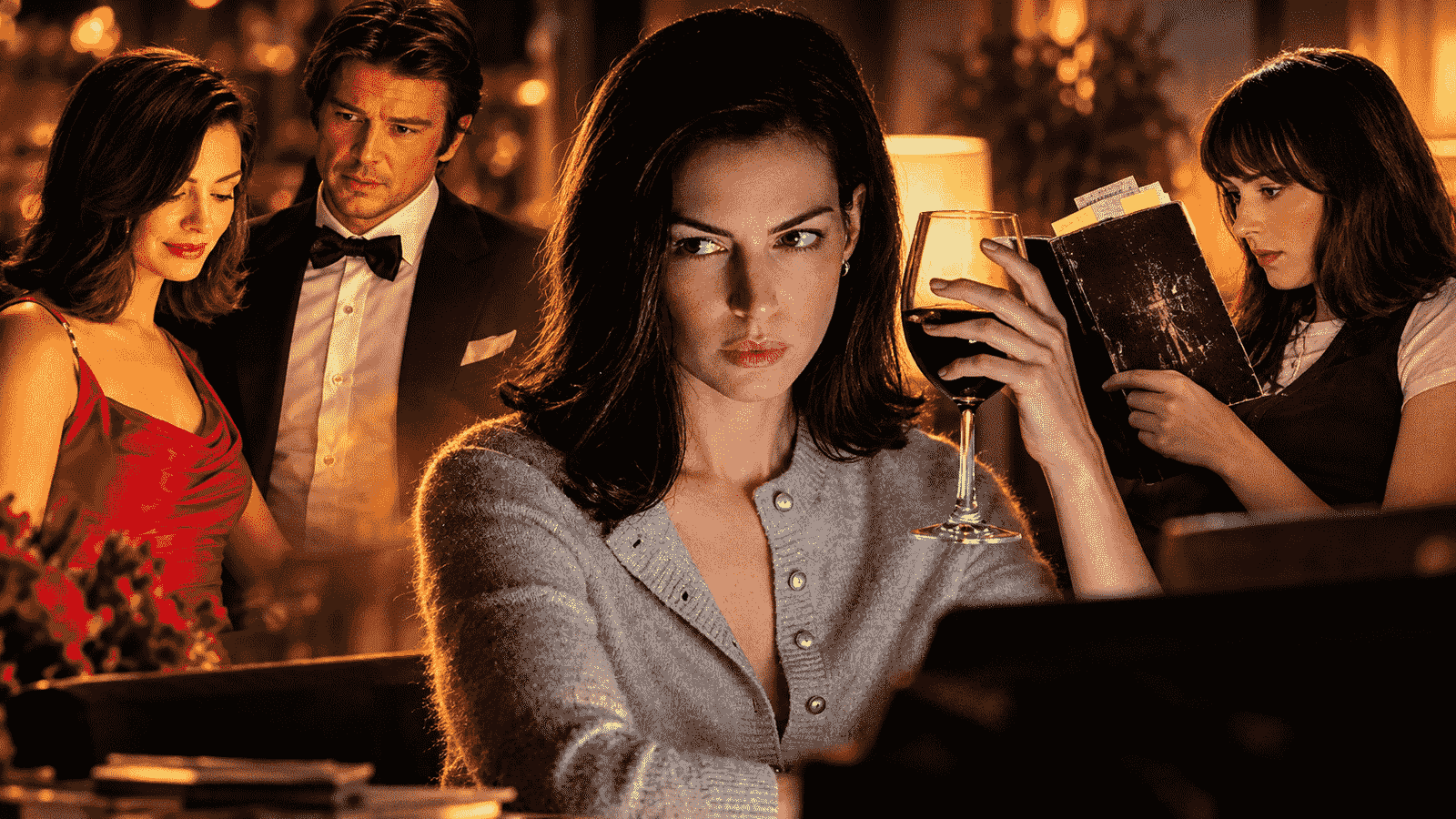
Director Michael Showalter’s film adaptation, which hit theaters on October 2, 2026, keeps the broad shape of the story intact but reworks several details for the screen. Dakota Johnson plays Lowen, Anne Hathaway takes on Verity, and Josh Hartnett plays Jeremy, with the central mystery around the manuscript still driving the plot.
The film ultimately follows a similar path to the book — Lowen comes to believe Verity has been faking her condition, shares that suspicion with Jeremy, and the story moves toward its dark resolution. But the movie adds a notable structural shift: rather than wrapping things up immediately, it jumps forward roughly a year, showing Lowen packing up her and Jeremy’s life together. It’s during this later timeline that she finds a second hidden letter — this one addressed not to Jeremy, but to the Crawfords’ son, Crew, introduced as part of the film’s expanded family unit. That letter delivers the movie’s own final twist, one that reframes Jeremy in a notably darker light than the novel’s ending suggests, leaving Lowen — and the audience — to wonder whether she’ll walk away from the life she’s built with him, or simply bury this secret the same way she buried Verity’s letter.
Critics and early audiences have responded to the film with a mix of enthusiasm and bemusement, generally agreeing that it leans into the story’s inherent campiness rather than trying to play every beat with total seriousness — a choice that seems to have both delighted fans who wanted a fun, twisty ride and frustrated those hoping for a more grounded adaptation.
So, What’s The “Real” Ending?
If you’re looking for a definitive answer on whether Verity was a murderer or simply a brilliant, misunderstood writer who lost control of her own manipulative instincts, the uncomfortable truth is that the story was never designed to give you one. Both the book and the film are built around an unreliable narrator relaying secondhand information about a woman who is, by every account, a master at shaping how others perceive the truth. Lowen’s decision to destroy the evidence rather than confront Jeremy with it isn’t a plot hole — it’s the entire point. She chooses the version of the story that lets her keep the life and the relationship she wants, and the audience is left holding the same impossible choice she was.
Whether you walk away team manuscript or team letter likely says less about which reading is objectively “correct” and more about how willing you are to believe that someone capable of writing something that dark could also be capable of genuine remorse — or whether that distinction even matters once the person it’s about is gone and can no longer explain herself either way.