
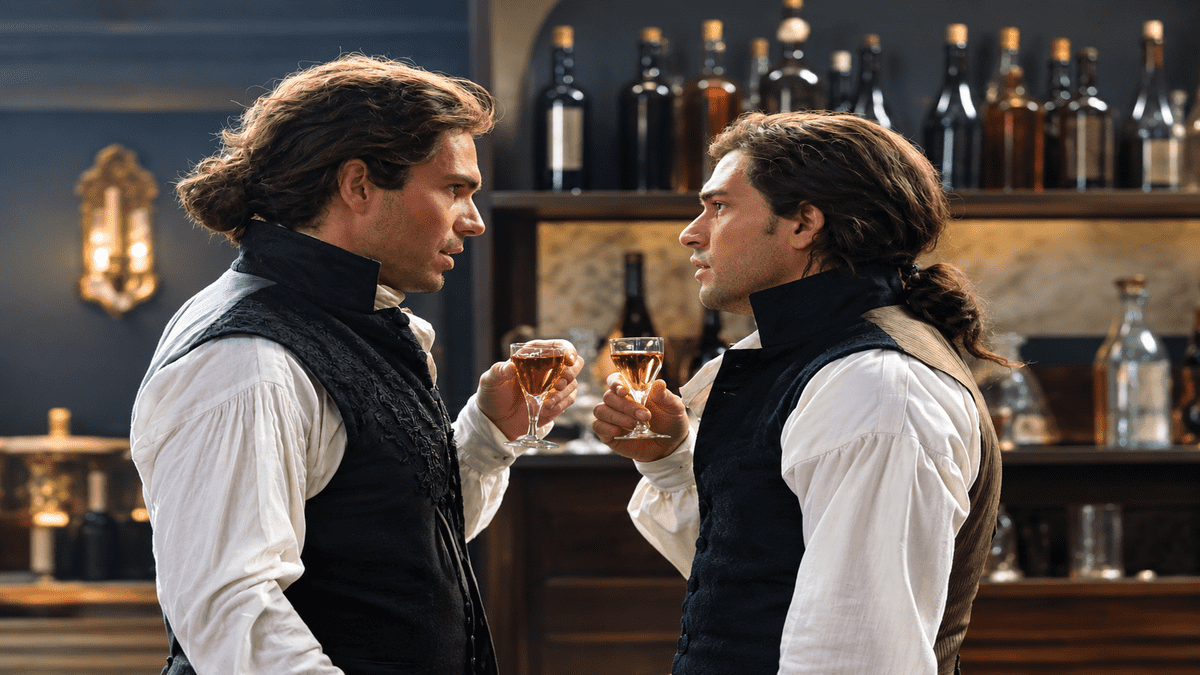
Sydney Carton gets kissed by the woman he loves and spends the next hour proving he doesn’t believe he deserves it. That is the whole shape of “Mother’s Ruin.” It is a small, cruel, very human episode, and it ends with a woman in Paris walking into the Bastille with an axe.
I’ll go through what happens, what it builds on from the earlier episodes, and where I think the finale is heading.
Quick Facts
- Episode: Season 1, Episode 3, “Mother’s Ruin,” aired Sunday, September 27, 2026 on MGM+ (see my note at the end about conflicting dates)
- Series: four-part limited series based on Charles Dickens’ 1859 novel, produced with the BBC
- Creator and writer: Daniel West, who also wrote Gunpowder with Kit Harington
- Director: Richard R. Clark (an early announcement had named Hong Khaou, but the finished series credits Clark)
- Cast: François Civil (Charles Darnay), Mirren Mack (Lucie Manette), Kit Harington (Sydney Carton, also an executive producer), Guillaume Gallienne (Alexandre Manette), Sharon Duncan-Brewster (Hester Lorry), Fehinti Balogun (C.J. Stryver), Roxane Duran (Thérèse Defarge), Theo Costa-Marini (Ernest Defarge)
- Next: Episode 4, “Resurrection Man,” on October 4
Where Episode 2 Left Everyone
You need this to read Episode 3 properly.
In Episode 1, Lucie learns her father may still be alive, eighteen years after she believed she watched him die. The messenger, Charles, is wounded at the English border and arrested as a spy. Lucie hires a drunk, brilliant lawyer named Sydney Carton to defend him. Both men fall for her.
In Episode 2, Lucie and Charles travel to Paris. They find her father in the Defarge household, locked in an attic, making shoes. He doesn’t know his own daughter, and he still calls Cell 105 in the Bastille’s North Tower home. We also learn that the carriage that killed a little girl named Juliette belonged to the Evremondes, the family Charles was born into. Charles confronts his uncle, the Marquis, and tells him the name ends with him.
Back in London, Lucie goes to Sydney’s place and, according to recaps of that episode, they sleep together. That matters for everything below.
The Recap
Charles at the Door
Episode 3 opens with Charles outside Lucie’s house. She is angry, and she has a right to be. He left her and her father in France when they most needed him, and now he is standing on her step like nothing happened. The two soften as the evening goes on, but the show doesn’t let the peace last.
The Bar
The scene that carries the first half is the bar. The bartender refuses to pour for Sydney until Charles agrees to cover the tab. That single detail tells you Sydney has been drinking on credit for a long time.
Then the two men circle each other. Sydney wants to know why Charles came back to London. Charles wants to know why Sydney was lurking outside Lucie’s home. At one point Charles compares Sydney to his own uncle, the Marquis. Both of them, he says, hide behind boredom and arrogance. Coming from a man who just renounced that family, it is the harshest insult he could pick.
They nearly reach a truce. Then Sydney asks what Lucie and Charles got up to in Paris.
Given what happened at the end of Episode 2, I read that as a jealous man fishing. He has already been with her, and he wants to know if Charles has too. Charles takes it as an insult to Lucie and answers with disgust: she deserves someone better than Sydney.
Sydney Vanishes
That sentence works like a switch. Sydney stops visiting Lucie for weeks, and the gap gets so obvious that Hester mentions it.
I like this beat more than the bar fight. Sydney doesn’t shout back or threaten anyone. He simply hides, which is what a man does when he suspects the insult is accurate.
The Desk
Lucie decides not to wait. She walks into Sydney’s office, where he tells her plainly that he isn’t worthy of her. She climbs onto his desk, kisses him and tells him he is wrong about himself. Then she invites him to dinner with Hester and Alexandre, who by now is grateful for the help Sydney gave the family.
If the recaps of Episode 2 are right, the desk is also where the two of them ended that episode. That makes this scene an echo, not a first step. The difference is that this time she isn’t sneaking to his door in disguise. She is saying it in daylight and asking him to sit at her table.
The Dinner
It goes wrong in slow motion. Sydney starts needling Charles about his law practice sitting near a gin parlor. Lucie stops the table and asks Sydney why he is behaving this way. Sydney’s answer is to accuse her of staging the whole evening as a show.
That is the cruelest line of the episode. Lucie went to his office and made herself vulnerable, and he turns it into a plot against him. It also proves what Charles said in the bar. Sydney sabotages the good things placed in front of him.
Then comes a smaller moment that I think matters more. Alexandre tells Charles that no father could hope for a better son. Charles answers that he can finally bury the Evremonde name for good. Alexandre reacts, visibly, and the show doesn’t tell us why.
After the meal, Sydney tries to apologize and promises to change. The damage is done, and he knows it.
Paris, 1789
The show then jumps to France and the Bastille. Episode 2’s Paris scenes were set in 1782, so the story has skipped seven years there. Thérèse leads the mob. Gaspard, who has stopped caring whether he lives since losing Juliette, is shot in the chaos.
Thérèse pushes past the fighting and heads straight for Cell 105 in the North Tower, the cell Alexandre once lived in. Inside she finds papers that could bring the Evremonde family to justice. On her way out she kills an injured guard with an axe. Her husband, Ernest, sees it, and the look on his face says he no longer recognizes her.
What Changes From the Book
Fans of the novel will notice two things.
First, the show makes Lorry a woman. Hester Lorry is a recent widow and a minority stakeholder in Tellson’s Bank. It’s a small change, but it gives Duncan-Brewster an actual seat at the table instead of a background role.
Second, in the novel it is Ernest Defarge who searches the cell. Here Thérèse gets that job, and Ernest becomes the witness instead. That is a bigger shift than it sounds. It turns her from a woman who knits and watches into someone who takes the risk herself, and it gives Ernest a reason to start doubting her.
My Theories
The papers in Cell 105 are the book’s manuscript. In Dickens, Dr. Manette writes an account of what the Evremonde brothers did and ends by denouncing the family and all their descendants. It is found in the cell and later used against Charles. I think the show is doing the same thing. The Episode 4 summary says a revelation at Charles’s trial changes everything, and that fits.
Alexandre’s flinch is the show’s real cliffhanger. In the book, learning who Charles is nearly breaks Manette’s mind again. Lucie’s entire project is bringing her father back, and one line at a dinner table just threatened it. I suspect Alexandre already knows, or is starting to guess.
Sydney’s promise matters more than his apology. The finale summary says he weighs an enormous sacrifice. I don’t think he becomes a new man overnight. I think he becomes brave once, and the desk scene is the reason. Somebody finally told him he was wrong about himself, and I believe that sentence stays with him.
Thérèse and Ernest are heading for a split. He watched her swing that axe. The show gave him that reaction on purpose.
What Worked
The bar scene. Two men who look alike hate each other because they recognize themselves. Civil plays Charles as decent and a little smug, and Harington plays Sydney as bitter and already beaten.
Sydney’s disappearance. The weeks of silence say more about him than the dinner outburst.
The Bastille sequence. It is short and brutal. The axe moment gives Thérèse a shadow and makes her revenge feel dangerous instead of righteous.
Hester. Sharon Duncan-Brewster notices things other characters miss, like Sydney’s absence, and that keeps the London scenes grounded.
What Didn’t Work
The runtime is too tight. Four episodes have to fit a love triangle, a family curse and a revolution. This hour gives the triangle a full crisis and the Revolution a few minutes, so both feel squeezed.
Sydney’s drinking is treated as mood. He is charming and tragic, but I never saw the ugly side of it. I wanted one scene where the cost feels real.
Lucie has too little to do. She kisses him, hosts the dinner and asks one good question. Then the men take over. She deserves a scene where she says what she wants.
The time jumps are hard to follow. The Bastille scenes are set seven years after Episode 2’s Paris trip. I’d like to understand how that fits with the London timeline.
What Critics Say
Critics are split. The Hollywood Reporter called it bland and said the three leads have no chemistry. Screen Rant and JoBlo were warmer, praising the reworked Sydney and the expanded world, though Screen Rant thought the class conflict was drawn too simply. Collider noted it is the first major television version since ITV’s in 1989. Wikipedia lists an 83% Rotten Tomatoes score, though it rests on only six reviews. Streaming reports vary, but the series has sat near the top of MGM+ charts in several countries.
Verdict: Hit or Flop?
Hit. It is a well-acted hinge episode, and it hurts in the right places. I wish it had more room, but the desk kiss and the bad dinner are both scenes I expect to remember when Sydney’s final choice arrives.
My rating: ★★★★☆ (4 out of 5)
Your turn: Is Alexandre’s flinch the real turning point of the episode? And do you think Sydney earns the sacrifice the finale is promising? Tell me in the comments, and catch Episode 4 on MGM+ on October 4.