
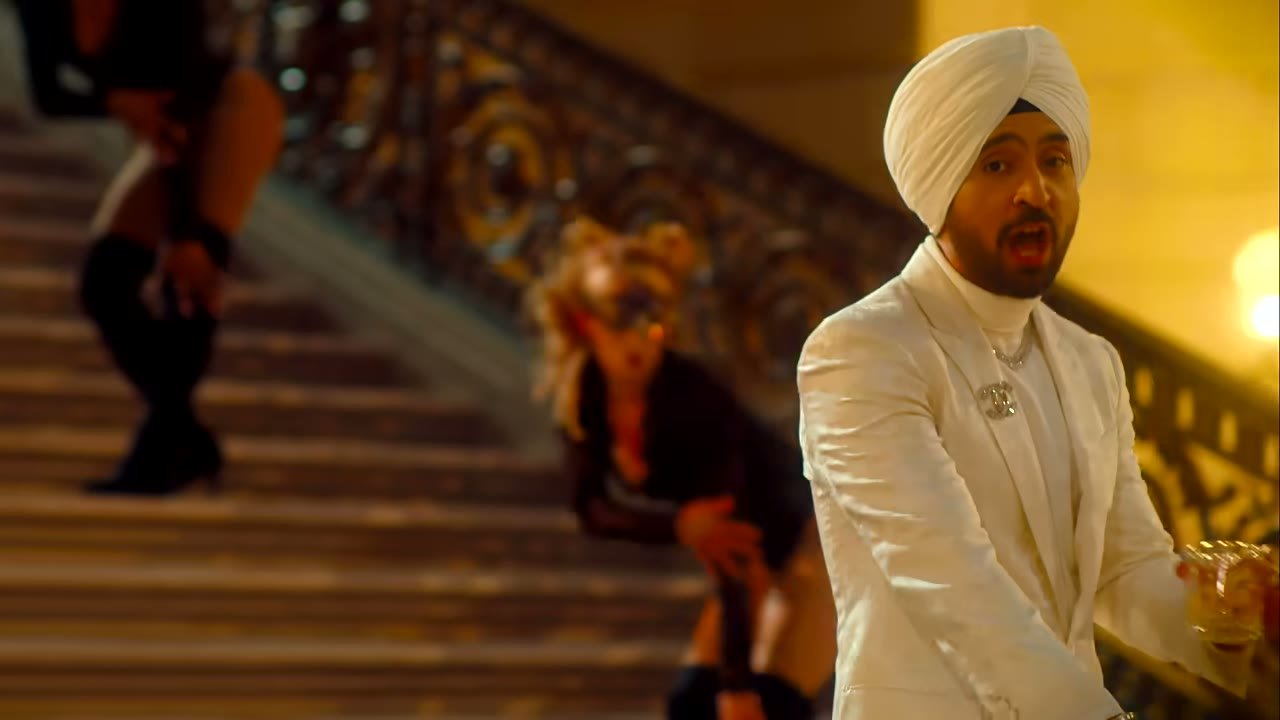
The Diljit Dosanjh songs ban debate reached the stage itself on Saturday night, November 21, when the Punjabi superstar used his Ahmedabad concert to publicly question why his music keeps running into restrictions in India while international acts perform similar lyrics at the same venues without any objection. Performing at the Narendra Modi Stadium as part of his AURA India Tour, Diljit Dosanjh compared his situation with British band Coldplay, who played at the same stadium last year, and asked the crowd a question that has since gone viral: why are there double standards for an Indian artiste?
According to Filmibeat, the singer’s remarks came after officials in Ahmedabad sought to stop him from performing four of his popular tracks at the show, a move that followed a similar episode in Indore earlier on the same tour. Rather than ignoring the controversy, Diljit addressed it head-on from the stage, mixing humour, defiance and a pointed question about how Indian and foreign performers are treated differently.
Quick Facts
- Artiste: Diljit Dosanjh, Punjabi singer and actor
- Event: AURA India Tour concert, Narendra Modi Stadium, Ahmedabad
- Date: Saturday, November 21, 2026
- What triggered it: A request by Ahmedabad’s District Child Protection Officer to the police commissioner asking that four of Diljit’s songs not be performed at the show
- Songs named: Patiala Peg, 5 Taara Theke, Jeb Vicho Feem and Jatt Fire Karda (spellings vary across reports)
- Reason given: The lyrics allegedly promote alcohol consumption, drugs, weapons and violence, and could influence children
- Diljit’s response: He questioned the “double standards”, pointing to Coldplay’s performance at the same venue in January 2025
What Happened At The Ahmedabad Concert
The Ahmedabad show was a milestone Diljit had been waiting for. The Narendra Modi Stadium is the world’s largest cricket stadium, and the singer told the audience that ever since he watched Coldplay perform there, he had dreamed of headlining the venue himself. He thanked his fans for making that wish come true, noting that he has performed at Wembley in London, but that this particular stage held a special place in his plans.
That dream, however, came with a shadow. In the run-up to the November 21 concert, the District Child Protection Officer in Ahmedabad wrote to the city police commissioner requesting that four of Diljit’s songs not be performed at the show. Separately, Chandigarh-based sociology professor Dr Pandit Rao Dharennavar raised objections to the same set of tracks and, according to reports, warned that he could move a contempt petition in the Gujarat High Court if the songs were performed. It was against this backdrop that Diljit decided to speak his mind in front of a packed stadium.
What Diljit Dosanjh Said On Stage
Diljit’s central argument was simple: the yardstick, he said, changes depending on who is holding the microphone. He reminded the crowd that when Coldplay performed at the same stadium, their song Hymn for the Weekend, which includes the line “I’m feeling drunk and high”, drew no complaints at all. He said he personally likes that song, but asked why nobody had a problem when Coldplay sang those words, while his own songs become a controversy. “Ye double standards kyun hai?” he asked — why these double standards?
He then turned to a second complaint that has followed him on this tour: the suggestion that he is somehow an outsider. People tell him he has come from abroad, Diljit said, adding with a laugh, “Main Honolulu thodi paida hua hoon” — I was not born in Honolulu. He pointed out that he was born in India, and that the musicians who travel the world with him are Indians born in this country too, asking the audience to applaud them.
Importantly, the singer insisted he holds no grudge against the people seeking restrictions on his shows. He said he has no problem with those who impose curbs on him, that he is enjoying himself, and that he sends them love as well. But he also delivered a clear warning to his critics, summed up in the line fans are now quoting everywhere: “Chedhoge toh jawaab dunga” — if you provoke me, I will respond. He added that he would keep performing, pay his taxes, and continue spreading Punjabi and Indian music across the world, and requested people not to provoke him, because such exchanges only make him trend.
The Four Songs And The Reason Given For The Ban Demand
The four tracks named in the Ahmedabad request are Patiala Peg, 5 Taara Theke, Jeb Vicho Feem and Jatt Fire Karda. Some reports render the titles slightly differently — Panj Tara, Je Bichcho Feem Labbiya and Jatt Utthe Fire Karda — but the set of songs is consistent across coverage. These are among Diljit’s most recognisable hits, and Patiala Peg and 5 Taara in particular have been concert staples for years.
The objection, as recorded in the child protection officer’s letter, is that the lyrics of these songs allegedly promote alcohol consumption, drug use, weapons and violence, and that such content could influence children present at the concert. The professor who has been raising the issue has made a similar argument, claiming the songs encourage drinking, drugs and gun culture. It is worth noting that, formally, what was issued in Ahmedabad was a request to the police ahead of the show; no court order banning the songs has been reported so far, even though the word “ban” has dominated the headlines.
Not The First Time: The Indore Episode And The Wider Context
Ahmedabad was not an isolated flashpoint. Just days earlier, at Diljit’s Indore concert on November 15, the District Child Protection Officer there directed the venue management to ensure the same four songs were not performed, acting on the same professor’s complaint. Diljit addressed the restrictions from the Indore stage as well, reciting lines from late poet Rahat Indori’s famous verse, including “Kisi ke baap ka Hindustan thodi hai”. Reports say he went on to perform Patiala Peg at that show despite the directive, and later shared a concert video with the caption “ROKO… TOKO… DHAMKAO… WE DID IT” — stop us, scold us, threaten us, we did it.
The pattern has followed other stops of the tour too. Reports around the Delhi concert mentioned authorities asking that children not be brought on stage and that the singer not wear bandoliers during the performance, and the Ahmedabad row was widely framed as coming “after Pune”, suggesting similar calls had surfaced earlier in the tour as well. For many fans and commentators, the debate is no longer about four songs; it is about whether Indian performers are policed more strictly than visiting international stars, and who gets to decide what a concert audience can hear.
What Happens Next
For now, the AURA India Tour rolls on, and Diljit has made it clear he intends to keep performing the way he always has. The immediate questions are whether the Gujarat High Court actually sees the contempt petition that was threatened, whether police in upcoming tour cities receive similar letters, and whether the singer’s setlist changes anywhere under pressure. His Indore defiance suggests it will not change quietly. At the same time, his Ahmedabad speech struck a deliberately non-confrontational tone towards the officials themselves, which may lower the temperature even as the larger argument about double standards continues online.
What Is Confirmed And What Is Not
Confirmed: Diljit Dosanjh performed at the Narendra Modi Stadium in Ahmedabad on November 21, 2026, as part of his AURA India Tour. Ahmedabad’s District Child Protection Officer wrote to the police commissioner requesting that four named songs not be performed, citing concerns about alcohol, drugs, weapons and their influence on children. Professor Pandit Rao Dharennavar objected to the same songs and reportedly warned of a contempt petition in the Gujarat High Court. A similar directive was issued before the Indore concert on November 15. Diljit’s on-stage remarks comparing his treatment with Coldplay’s January 2025 show at the same stadium were recorded and widely reported.
Not confirmed: Whether any legally binding ban on the songs exists — so far, reports describe a request to police, not a court order. Whether Diljit actually performed all four songs at the Ahmedabad show has not been clearly established in reports, which focus on his speech. The exact spellings of two song titles differ between reports. There is also no official word yet on whether the threatened court petition has been filed, or whether the police acted on the Ahmedabad letter.
What do you think — is Diljit right to call this a double standard, or should concert songs with references to alcohol and guns face restrictions when children are in the audience? Tell us your view in the comments below.