
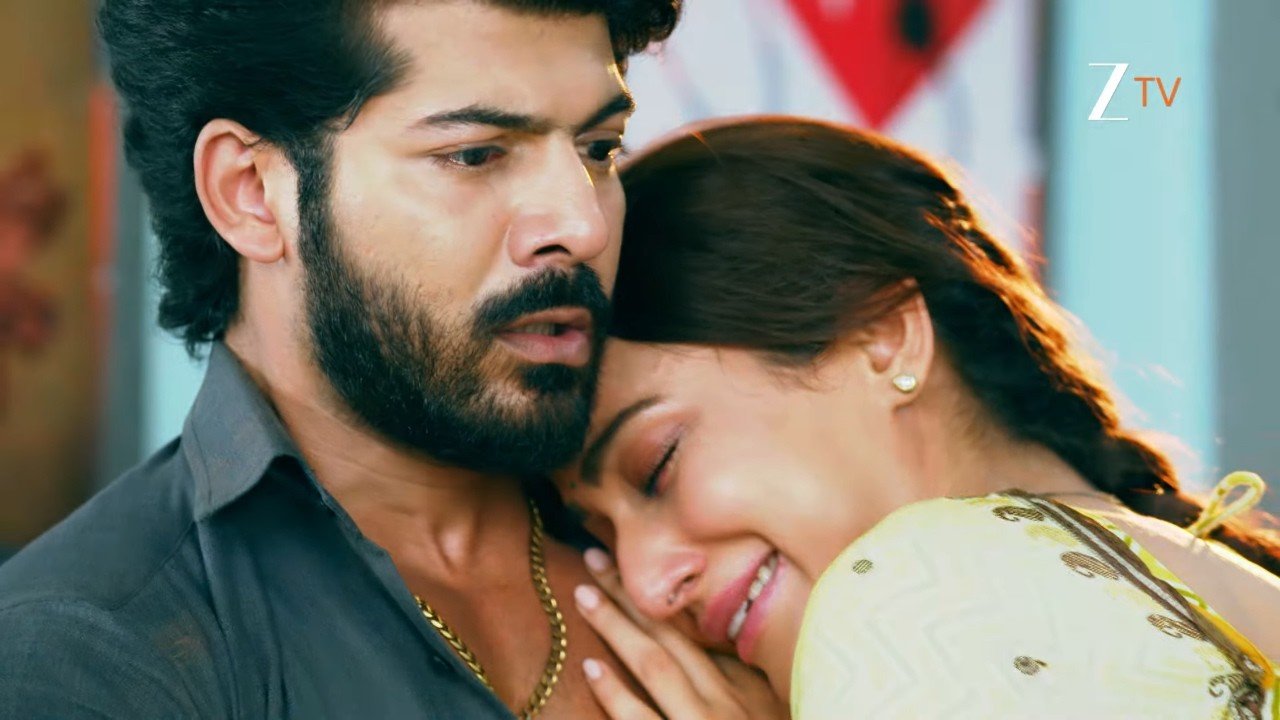
Zee TV’s Ganga Mai Ki Betiyan has put one of the hardest questions in Indian family life at the centre of its current story: what happens to a woman after her marriage ends? In an exclusive interview with Filmibeat, actor Namrata Pradhan, who plays Sahana in the show, has spoken plainly about the double standard that follows a failed marriage — and about why this track deserves the audience’s full attention.
QUICK FACTS
Show: Ganga Mai Ki Betiyan
Channel: Zee TV
Timings: Monday to Sunday, 9 pm
Character in focus: Sahana, played by Namrata Pradhan
Track: Sahana’s failed marriage and her return home
Interview: with Filmibeat Assistant Editor Abhishek Ranjit, published 17 November 2026
Sahana’s story: blamed at home, judged outside it
The show follows Ganga, a woman abandoned for not bearing a son, who raises her three daughters — Sneha, Sahana and Soni — against the odds in Varanasi. In the current track, Sahana comes back home after her marriage fails. Instead of comfort, she is met with blame. Her own family makes her feel that she is the reason the marriage broke down, and the talk does not stop at the front door: neighbours and villagers begin questioning her character, and her choices and her relationships become public property.
A marriage ending can change a woman’s life. According to Filmibeat’s report of the interview, the judgement that follows can be even harder to live with than the break-up itself. Sahana’s experience in the show captures exactly that — empathy is replaced by interrogation, and support is replaced by suspicion.
The pressure eventually becomes unbearable, and Sahana goes back to her in-laws’ house even though she does not want to. The makers have hinted, however, that this is not the end of her story: Sahana will find the strength to fight back. That promise is what gives the track its tension — a woman pushed into a corner, expected to endure, who may yet refuse to.
The double standard Namrata Pradhan calls out
The heart of Namrata’s interview is the difference in how society treats men and women after a relationship ends. Women, she says, are asked to compromise, to change themselves and to take the blame. Men, in the same situation, are handed a second chance with barely a question asked.
She points to a pattern most viewers will recognise. A man who marries more than once, who goes through a divorce, or who makes mistakes in a relationship is accepted, and society simply moves on. A woman in the same position faces criticism and is asked again and again why she could not adjust. The burden of keeping a marriage together, in other words, is placed on her shoulders alone — and when it breaks, so is the blame.
For a woman coming out of a marriage, Namrata says, the journey is very hard: she has to pay a very big price, make a great many adjustments and keep changing herself to suit others, while a man can do anything. Her question to society is simple and direct: “Why is it so difficult for women?”
Her wider point is one of worth. No woman, she believes, should be made to feel that a divorce or a failed relationship defines her value. A marriage ending is an event in a life, not a verdict on the person who lived through it.
“A girl should definitely have her parents’ support”
The most painful part of Sahana’s story, Namrata says, is what happens inside her own home. Instead of standing by their daughter, her family tells her that a woman’s place is in her husband’s house. That line — familiar to many households — is what leaves Sahana with nowhere to turn.
Namrata is candid about her disappointment that parents do not always stand with their daughters after marriage. Too often, she says, a daughter is treated as a burden, or as someone else’s responsibility once she is married. Her view is unambiguous: a girl should definitely have the support of her parents, because if that support is missing, she has nowhere to go.
She notes that this is not only Sahana’s story. Many women across India face the same situation when a marriage ends — returning to a home that no longer feels like one, and finding the door half-closed. Performing these scenes, Namrata says, often leaves her questioning how a family can turn away from its own daughter at such a moment.
One sequence stayed with her in particular: a scene involving Sita’s family, in which the circumstances around the character’s mother were shown in a way that made her think again about the support a girl should receive from her parents. It is a small detail, but it shows how the writing is reaching beyond Sahana to the women around her.
Why this storyline matters now
Indian television has long treated divorce as a scandal to be whispered about rather than a reality to be discussed. Ganga Mai Ki Betiyan is doing the opposite, and Namrata is clear about why that matters: the show is breaking the silence around divorce and giving the audience a reality check they need.
The track works because it refuses to make Sahana a cautionary tale. She is not presented as a woman who failed, but as a woman failed by the people around her — by a family that blamed her, by neighbours who judged her, and by a set of rules that were never applied equally. The story asks the audience to notice that imbalance, not to accept it.
Namrata says she is very happy to be part of a show raising such an important issue. That matters, too: when a popular daily soap takes a stand, the conversation reaches living rooms that editorials and debates never touch.
What is confirmed — and what is not yet confirmed
Confirmed: Sahana has returned home after her failed marriage, faces blame from her family and questions about her character from the village, and has gone back to her in-laws’ house under pressure. Namrata Pradhan has spoken on the record about the double standard and about parents’ support for daughters after marriage, in an interview with Filmibeat published on 17 November 2026.
Not yet confirmed: how Sahana’s fightback will unfold. The makers have only hinted that she will find the strength to push back, so the shape of that turning point — and whether her family changes its stand — is still to be seen in the episodes ahead.
Ganga Mai Ki Betiyan airs from Monday to Sunday at 9 pm on Zee TV.
What do you think of Sahana’s track — and of Namrata Pradhan’s point about the double standard? Share your views in the comments below.
More from Popelyn’s television coverage: Yeh Rishta Kya Kehlata Hai Written Update 17 November